

How the 2027 Chrysler Pacifica’s Turn Signal-Activated Blind Spot View Helps Madison, WI Drivers
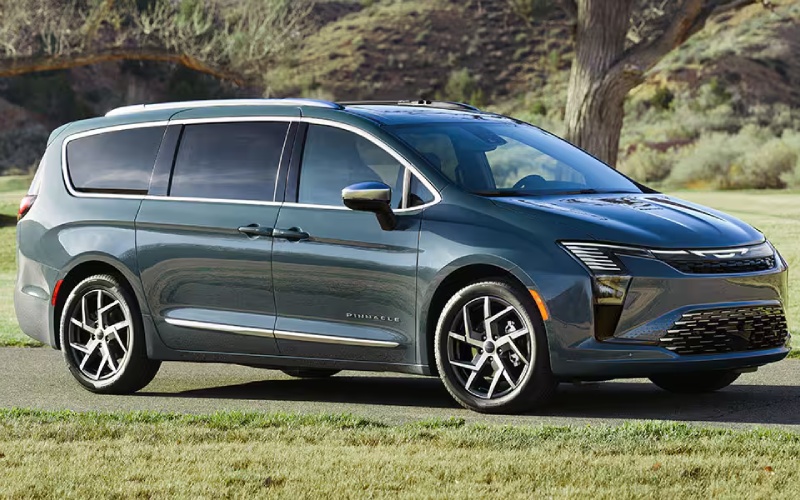
Russ Darrow Automotive Group – How the 2027 Chrysler Pacifica’s Turn Signal-Activated Blind Spot View Helps Madison, WI Drivers
Shoppers comparing family vehicles often want technology that feels useful in daily driving, not just impressive on a spec sheet. Turn Signal-Activated Blind Spot View is a strong example because it addresses a familiar situation: changing lanes while managing surrounding traffic, passengers, and limited rearward sightlines. In the Chrysler Pacifica, this available system can use a dedicated camera on the corresponding exterior mirror to display what is in the blind spot on the 10.1-inch Uconnect® touchscreen when the turn signal is engaged.
That added visual reference can be especially valuable for Madison, WI, drivers navigating multi-lane roads, campus-area traffic, Beltline commutes, retail corridors, and school pickup zones. A minivan naturally carries people and gear, so clear visibility matters. While mirrors and proper shoulder checks remain essential, this available camera-based view can support driver awareness by bringing blind-spot information to the central display in a way that is easy to understand.
How the System Works
Turn Signal-Activated Blind Spot View is designed to feel intuitive. When the driver signals a lane change, an available dedicated camera on the same side of the vehicle can show the blind-spot area on the 10.1-inch Uconnect® touchscreen. Instead of asking the driver to interpret only an alert or indicator, the system provides a live camera perspective that helps show what is beside the Pacifica.
This matters because family driving often involves more than simply moving from point A to point B. A driver may be listening for navigation prompts, keeping an eye on a merging vehicle, monitoring rear-seat needs, and preparing for a turn or exit. A clear camera view can reduce guesswork in moments where quick situational awareness is helpful. The system does not replace attentive driving, but it can add confidence by showing more information at the exact time a lane change is being considered.
Why It Matters in a Family Minivan
The Pacifica is built around family life, and family life can be busy. The cabin may include children, adults, backpacks, sports bags, groceries, strollers, or travel gear. Even with good outward visibility, a full cabin can make drivers appreciate every available tool that supports awareness. Turn Signal-Activated Blind Spot View fits that need because it helps the driver see the side area more clearly when signaling.
The system also pairs well with the Pacifica’s broader approach to thoughtful technology. Chrysler continues to offer the 10.1-inch Uconnect® 5 touchscreen display for easy one-touch access to entertainment, apps, available navigation, and more. Using that screen for available blind-spot camera information makes sense because the display is already a central command point. Instead of burying key information in a hard-to-find menu, the system can show a relevant view during a specific driving action.
Situations Where the Added View Can Help
Different drivers may notice the benefits in different situations. For a commuter, the system can help during lane changes on busier roads. For a parent, it can support awareness while leaving a school area or merging into traffic after a practice or activity. For a household that uses the Pacifica as the main family vehicle, added visibility can be useful during errands, appointments, and longer drives.
- Multi-lane travel: The available camera view can help show vehicles positioned in the blind-spot area during lane changes.
- Urban driving: The system can assist with awareness around bicycles, smaller vehicles, and traffic near intersections or retail areas.
- Family schedules: The added view can support confidence when the cabin is full and attention demands are high.
- Parking-area exits: The system can help drivers gather more visual information before moving into a lane of travel.
- Longer routes: The available display can reduce uncertainty when changing lanes around faster-moving traffic.
Those examples show why the feature is more than a novelty. It supports the kind of repeated driving moments that shape how comfortable a vehicle feels over time. A family vehicle should reduce friction, and visibility technology can be a meaningful part of that experience.
How It Fits With the Upgraded Safety Sphere Package
Chrysler highlights the upgraded Safety Sphere Package as part of the Pacifica’s focus on heightened safety and security. Turn Signal-Activated Blind Spot View is joined by another available enhancement called ParkSense® Based Camera Activation. That system can use alerts from the ParkSense® Park Assist System to activate the camera, helping the driver see exactly what may be blocking the path.
Together, these available enhancements help the Pacifica provide useful information in common low-speed and lane-change situations. Parking lots, garages, driveways, and crowded pickup lanes can create visual challenges, especially in a larger family vehicle. ParkSense® Based Camera Activation can help bring attention to obstacles, while Turn Signal-Activated Blind Spot View can assist when preparing to move laterally in traffic. Both systems reflect a practical design philosophy: technology should appear when it is needed and help the driver make more informed decisions.
What to Check During a Test Drive
A test drive is the best way to understand how Turn Signal-Activated Blind Spot View fits your driving habits. Before heading out, ask a product specialist to confirm whether the Pacifica being evaluated is equipped with this available system. Then take time to use the turn signals in normal lane-change situations where it is safe and appropriate. Pay attention to how quickly the camera image appears, how clear the view looks on the 10.1-inch Uconnect® touchscreen, and how naturally the information fits into the driving routine.
- Confirm equipment: Ask whether the specific vehicle includes Turn Signal-Activated Blind Spot View and related available Safety Sphere Package enhancements.
- Adjust seating: Set the driver seat, mirrors, steering wheel, and screen visibility before evaluating any driver-assistance technology.
- Use normal signals: Activate the turn signal during safe lane-change opportunities and note how the display supports awareness.
- Test parking support: If equipped, ask to see how ParkSense® Based Camera Activation works in a controlled parking setting.
- Evaluate comfort: Consider whether the system feels helpful, clear, and easy to interpret without adding distraction.
After the drive, take a few minutes to review the experience rather than rushing to the next step. Good technology should feel natural after a short learning period. If the camera view helps reduce uncertainty during lane changes, that may be an important point in favor of choosing a Pacifica configuration with the available system.
How This Feature Supports Local Driving Needs
For shoppers serving Madison, Green Bay, and Kenosha through family, work, school, or travel routines, visibility technology can play a practical role in daily confidence. Madison-area driving can involve a mix of residential streets, university traffic, commuter routes, and shopping destinations. The Pacifica’s available blind-spot camera view is helpful because it supports awareness without requiring drivers to dig through menus or activate a separate mode manually.
Russ Darrow Automotive Group can help shoppers compare Pacifica configurations and understand which available packages include the visibility and family technology features that matter most. This is especially useful when comparing multiple vehicles online because terms such as “available” and package names can be easy to overlook. A knowledgeable product specialist can explain how Turn Signal-Activated Blind Spot View, ParkSense® Based Camera Activation, Uconnect® 5, the available Theater Group, FamCAM™ Interior Camera, and available Stow ’n Vac® Vacuum work together to support a more convenient ownership experience.
Frequently Asked Questions:
Does Turn Signal-Activated Blind Spot View replace checking mirrors?
No. The available system is designed to support awareness, not replace attentive driving. Drivers should still use mirrors, signals, and proper visual checks. The benefit is that the camera view can provide additional information on the 10.1-inch Uconnect® touchscreen when the turn signal is engaged.
Is the camera view available on every Pacifica?
Chrysler describes Turn Signal-Activated Blind Spot View as an available feature. Shoppers should confirm package and trim availability for the specific vehicle being considered.
Why is this feature helpful in a minivan?
A minivan often carries passengers and cargo, and busy family routines can involve frequent lane changes, parking-lot navigation, and school or activity drop-offs. An available blind-spot camera view can help the driver gather more visual information during those moments.
Can this system be demonstrated during a test drive?
Yes, if the specific Pacifica is equipped with the available system. Ask for a guided demonstration so the display behavior, camera view, and related driver-assistance technologies can be evaluated in a safe setting.
Turn Signal-Activated Blind Spot View is compelling because it is easy to understand and relevant to real driving. It gives the Pacifica another layer of practical family-focused engineering, especially for shoppers who want a minivan that combines flexible seating, modern connectivity, and helpful available safety technology. For Madison shoppers comparing options, this available system is worth seeing in person.
0 comment(s) so far on How the 2027 Chrysler Pacifica’s Turn Signal-Activated Blind Spot View Helps Madison, WI Drivers